
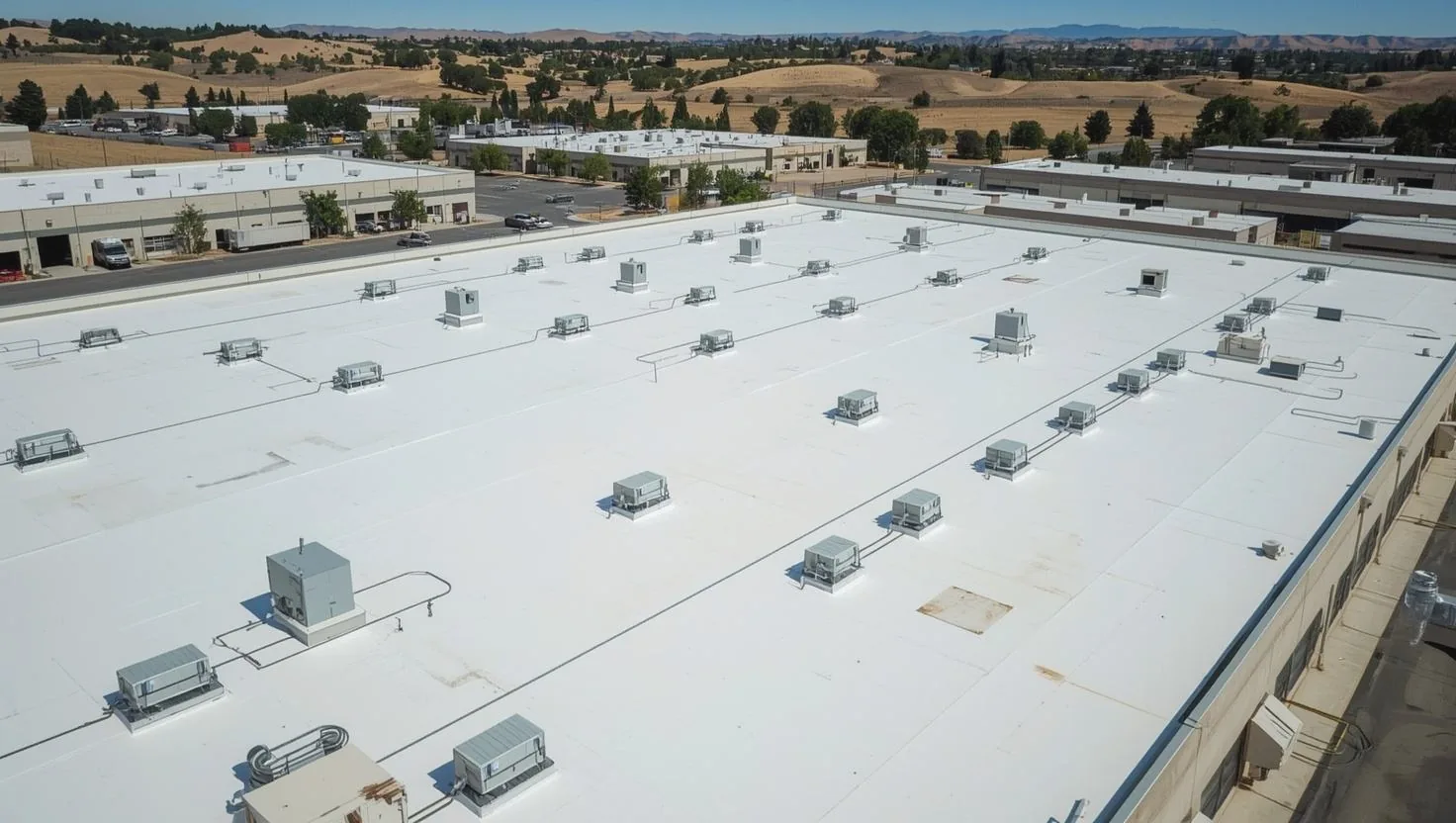
Fairfield Superior Commercial Roofing: Quality Roof Installation & Repair
Commercial roofing in Fairfield, CA for warehouses, business parks, retail centres and light manufacturing across Solano County. Flat roof replacement, membrane systems, restoration coatings, leak repair and scheduled maintenance, answered 24 hours a day.
- Core cuts and moisture survey before we quote
- Fully adhered systems for the Suisun wind corridor
- Written scope you can compare against another bid
- Emergency leak response answered around the clock
Commercial roofing services in Fairfield and Solano County
Fourteen distinct services covering the full life of a low-slope commercial roof, from the first leak through restoration to eventual replacement, plus broader overviews of flat roofing, industrial roofing and roof recover.
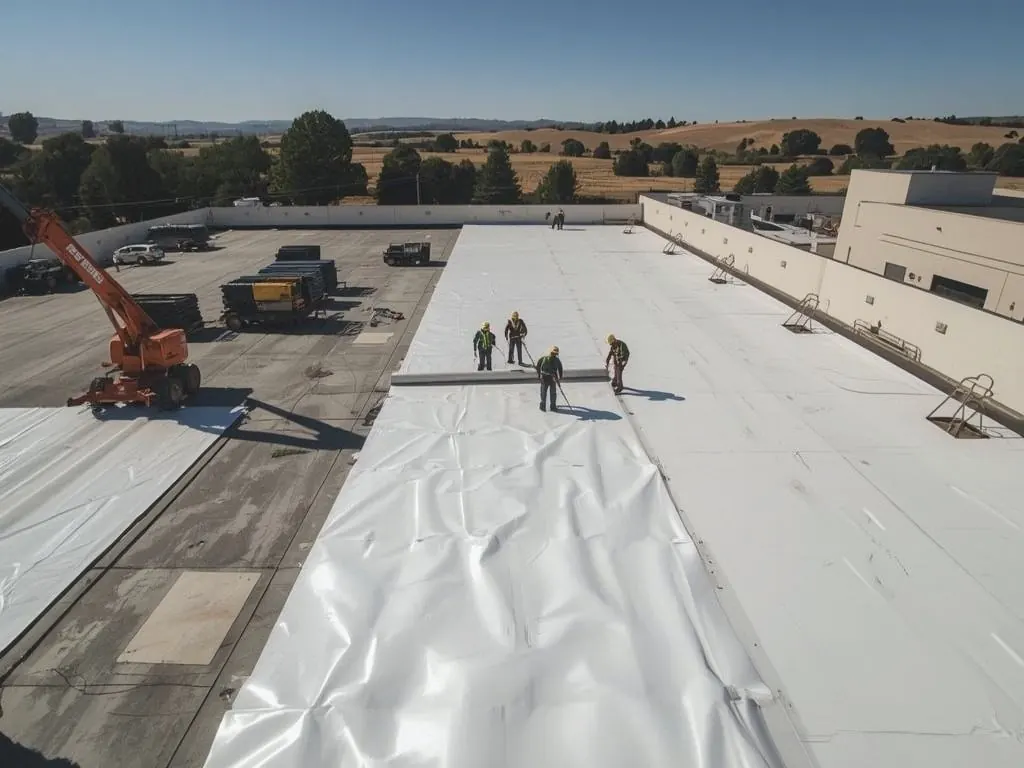
Commercial Roof Replacement
Full tear-off and re-cover for low-slope roofs on warehouses, business parks and retail centres.
See roof replacement details →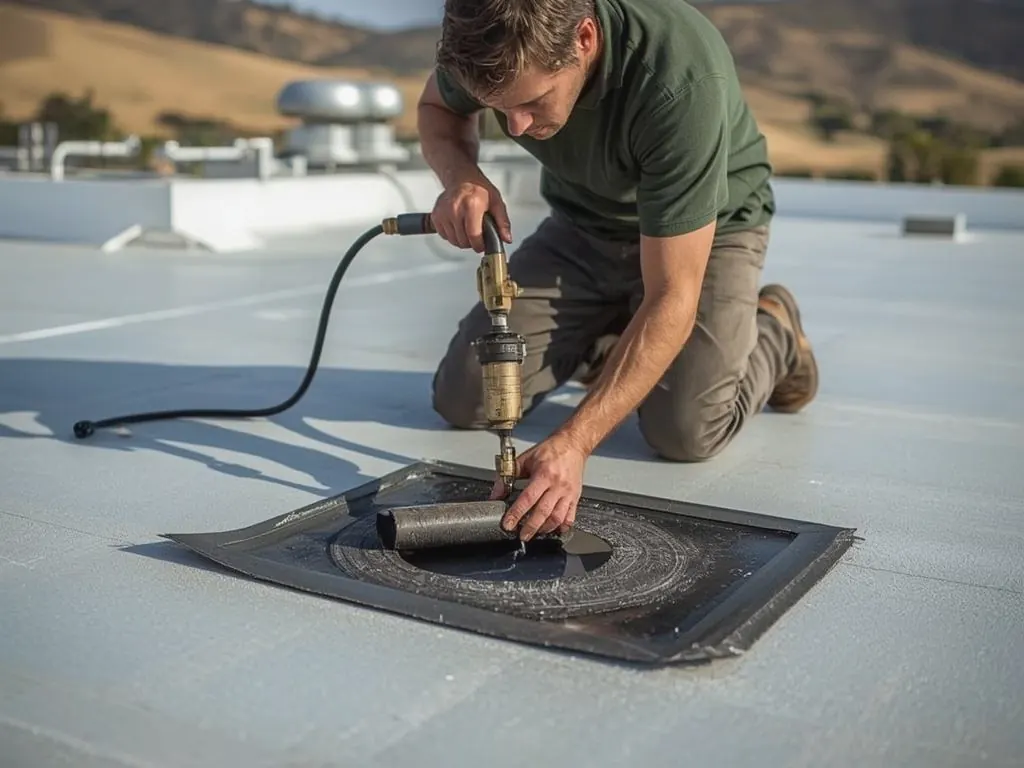
Commercial Roof Repair
Leak tracing, seam and flashing repair, and fixes that hold rather than getting you to the next storm.
See roof repair details →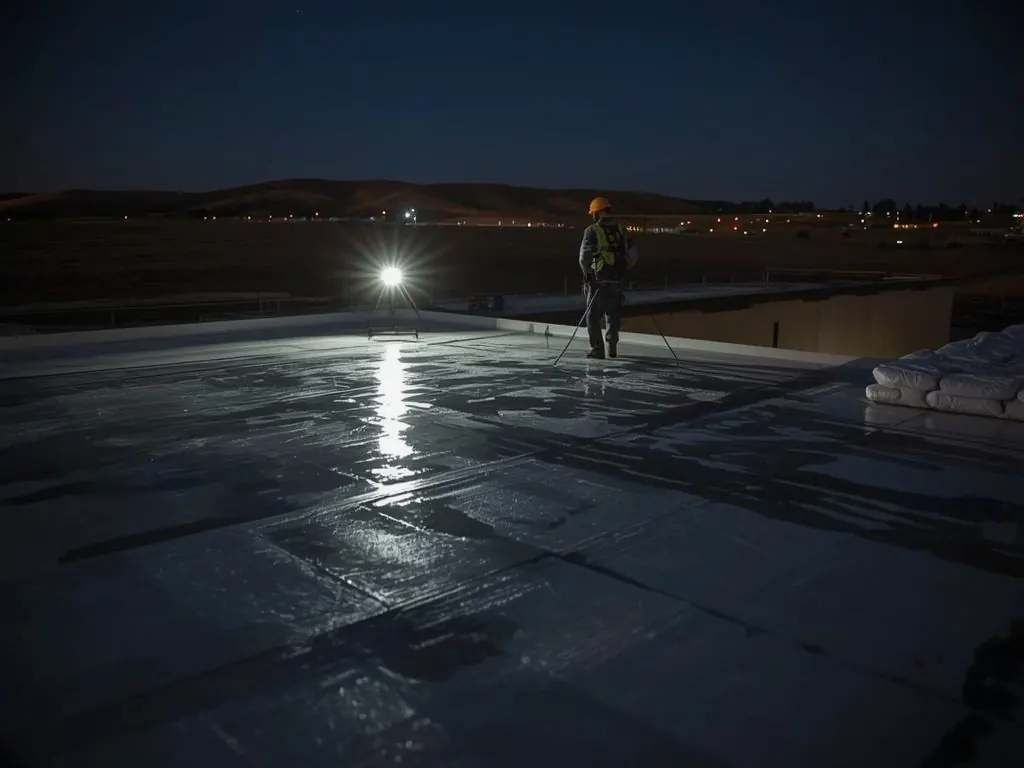
Emergency Roof Repair
24 hour response for active leaks, storm damage and wind-lifted membrane. We stop the water first.
See emergency repair details →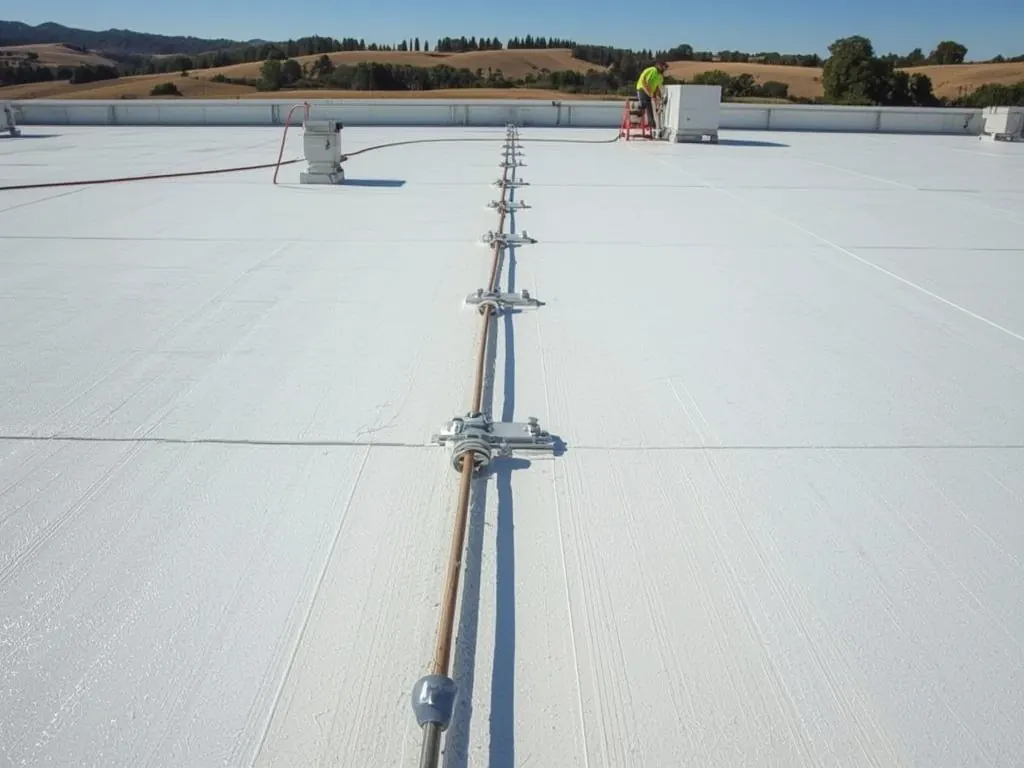
TPO Roofing
Heat-welded single-ply membrane, and the easiest path to Title 24 cool roof compliance.
See TPO details →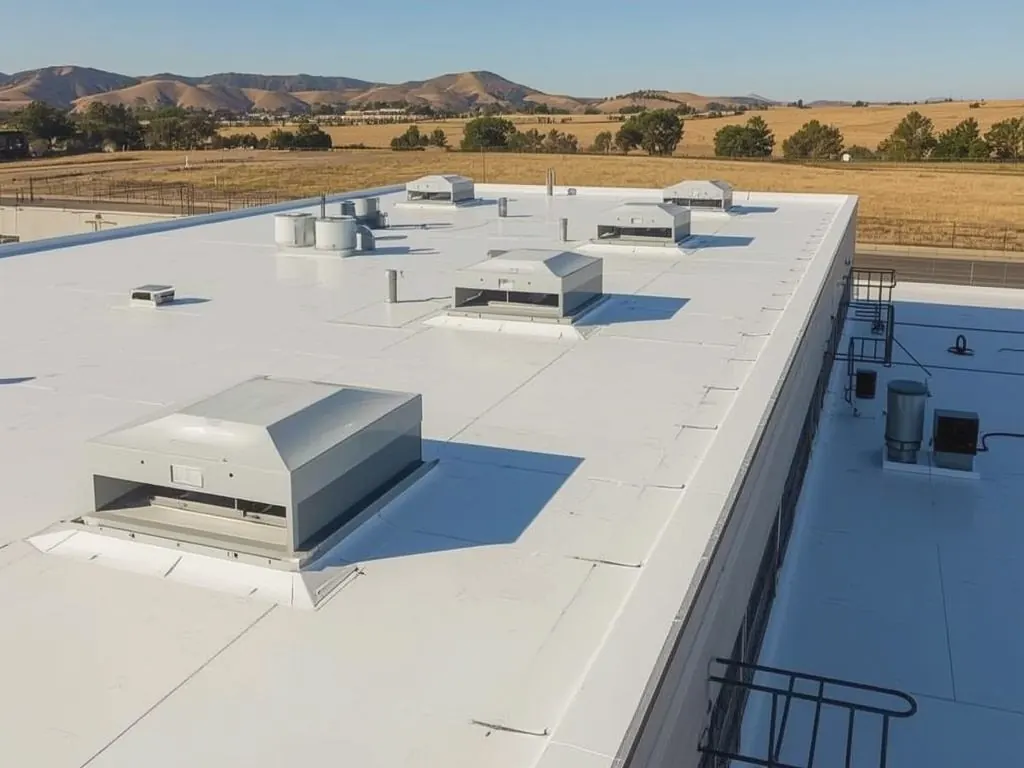
PVC Roofing
Grease and chemical resistant membrane. The specification of record for restaurants and food processing.
See PVC details →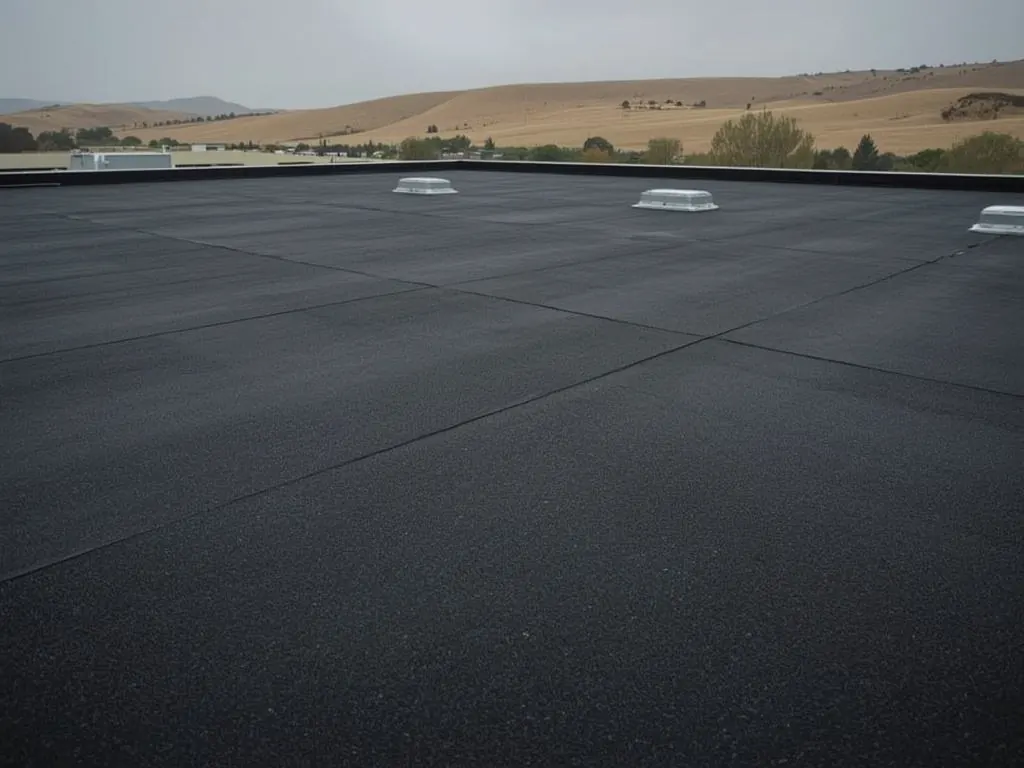
EPDM Roofing
Synthetic rubber membrane with the longest documented field record in commercial roofing.
See EPDM details →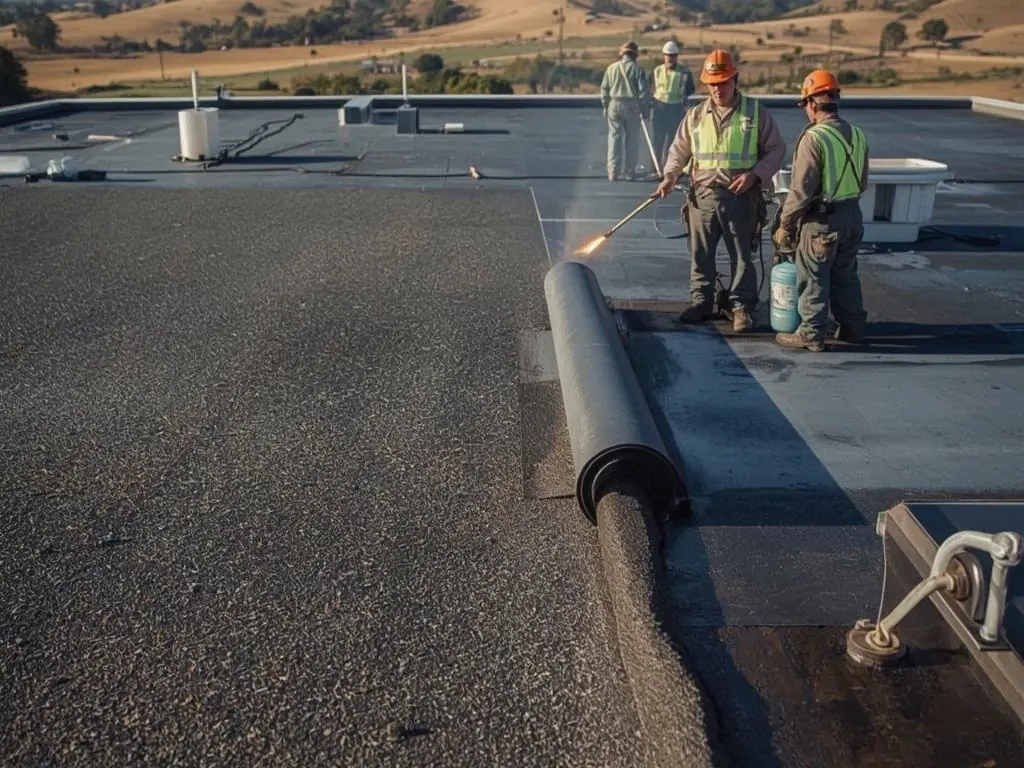
Modified Bitumen & Built-Up Roofing
Multi-ply asphalt systems with redundancy built in, for roofs that take heavy foot traffic.
See modified bitumen details →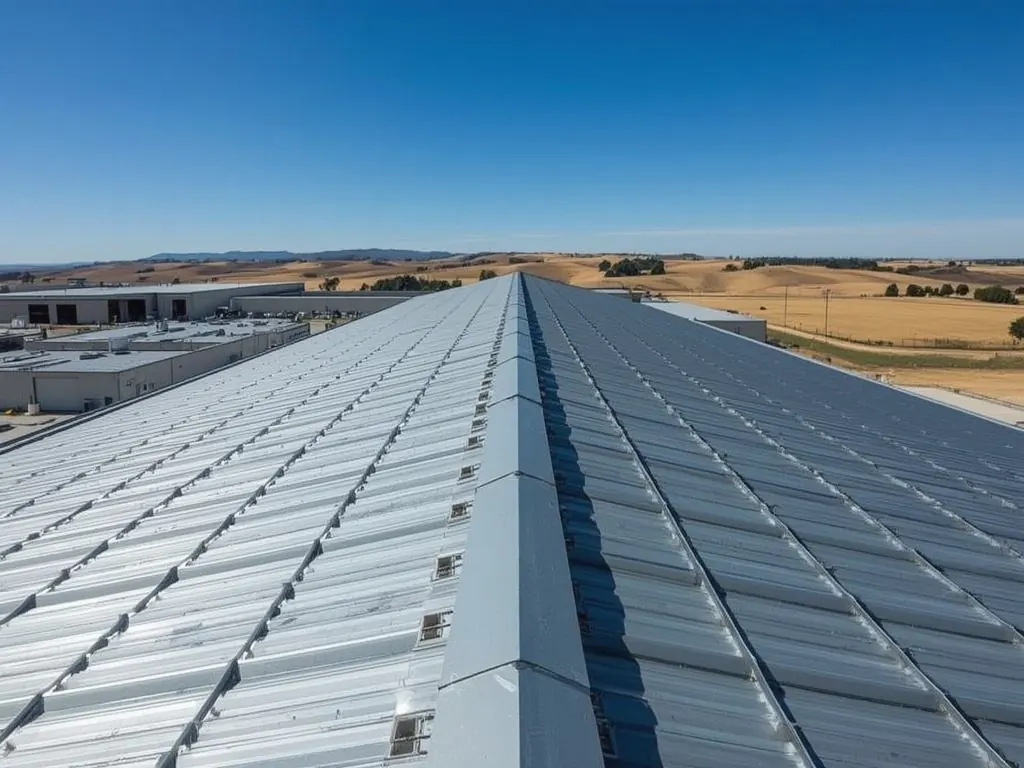
Commercial Metal Roofing
Standing seam, retrofit and re-screwing, with a published 40 to 60 year service life.
See metal roofing details →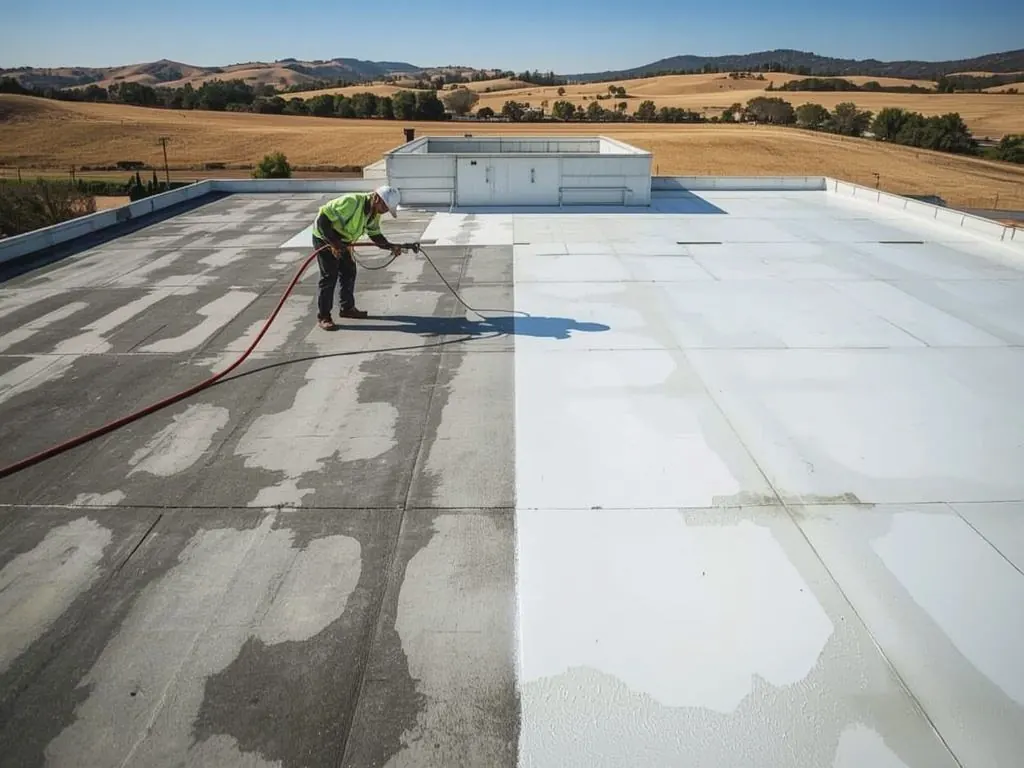
Roof Coatings & Silicone Restoration
Silicone restoration that extends an aged but sound roof for roughly half the cost of replacement.
See coating details →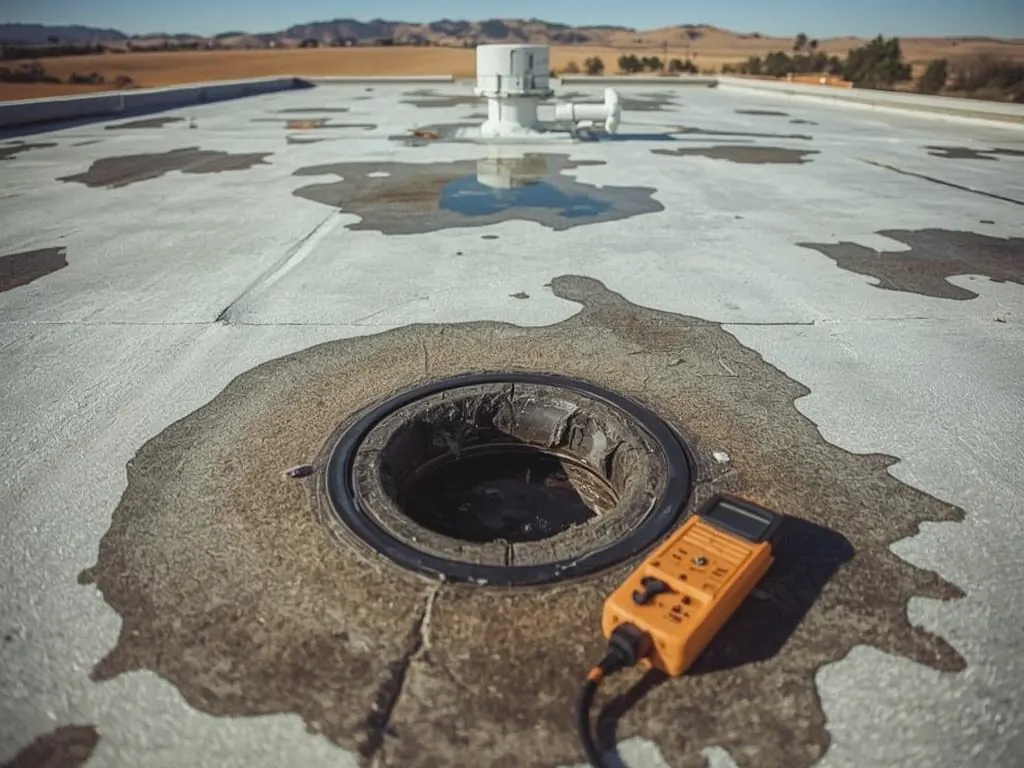
Flat Roof Leak Repair
Finding where the water actually enters, and correcting the drainage that put it there.
See leak repair details →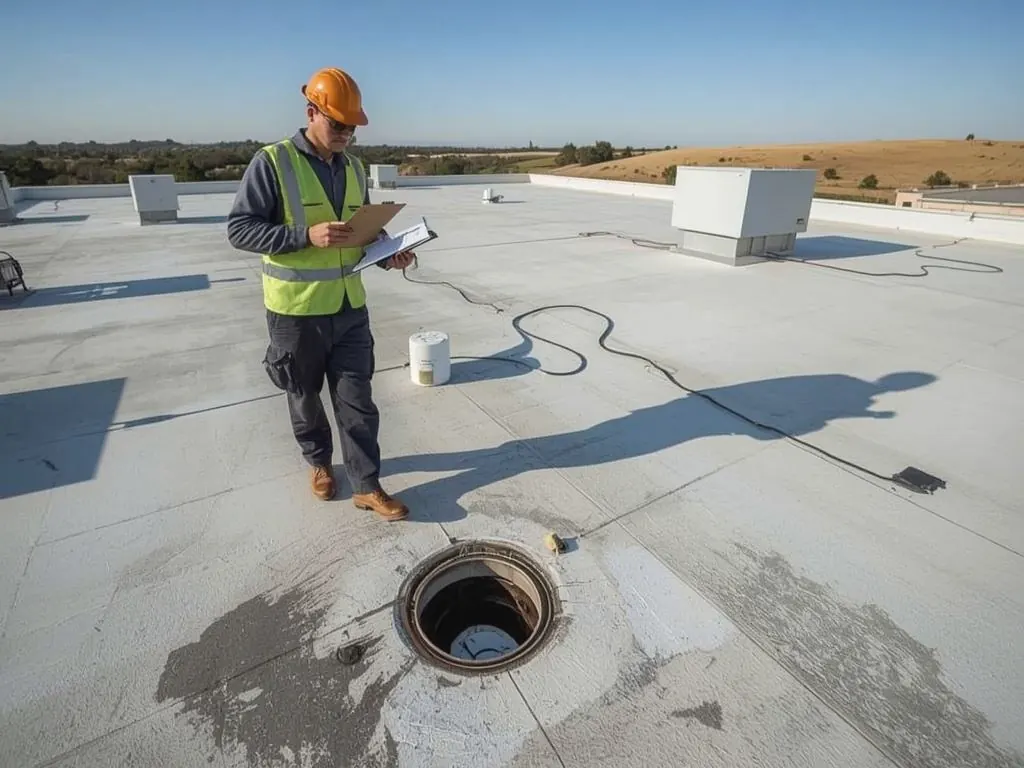
Preventive Roof Maintenance
Scheduled inspections and drain clearing. The NRCA puts maintained roofs at 21 years against 13.
See maintenance details →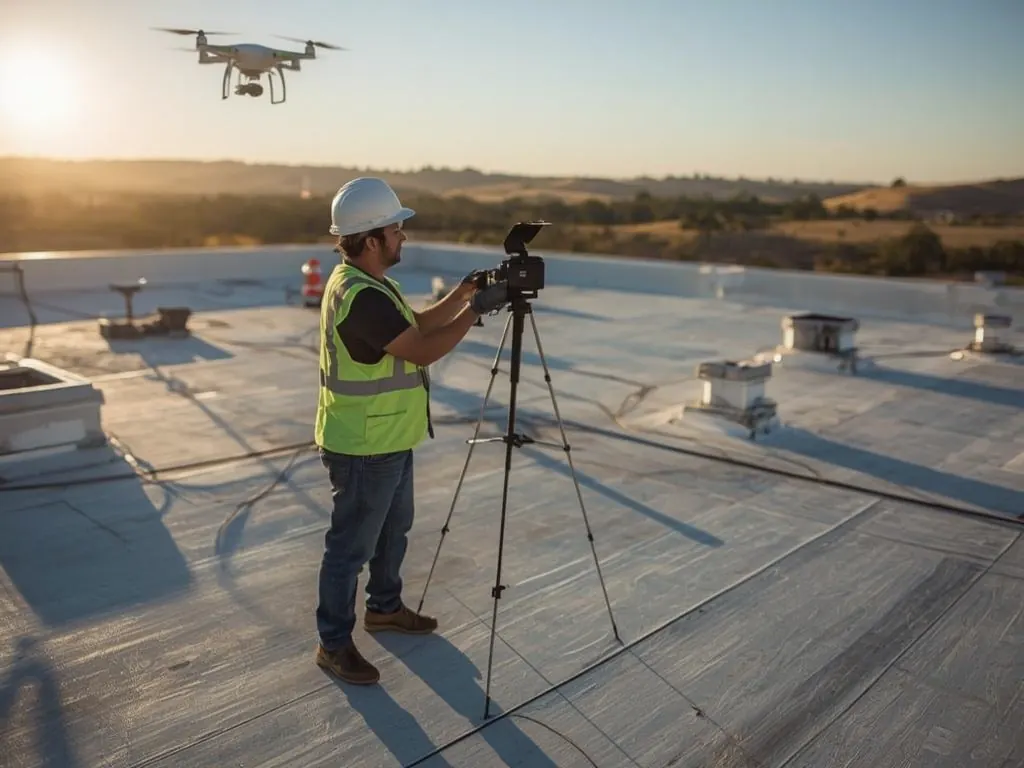
Commercial Roof Inspections
Condition assessments, infrared moisture surveys and due diligence reports you can act on.
See inspection details →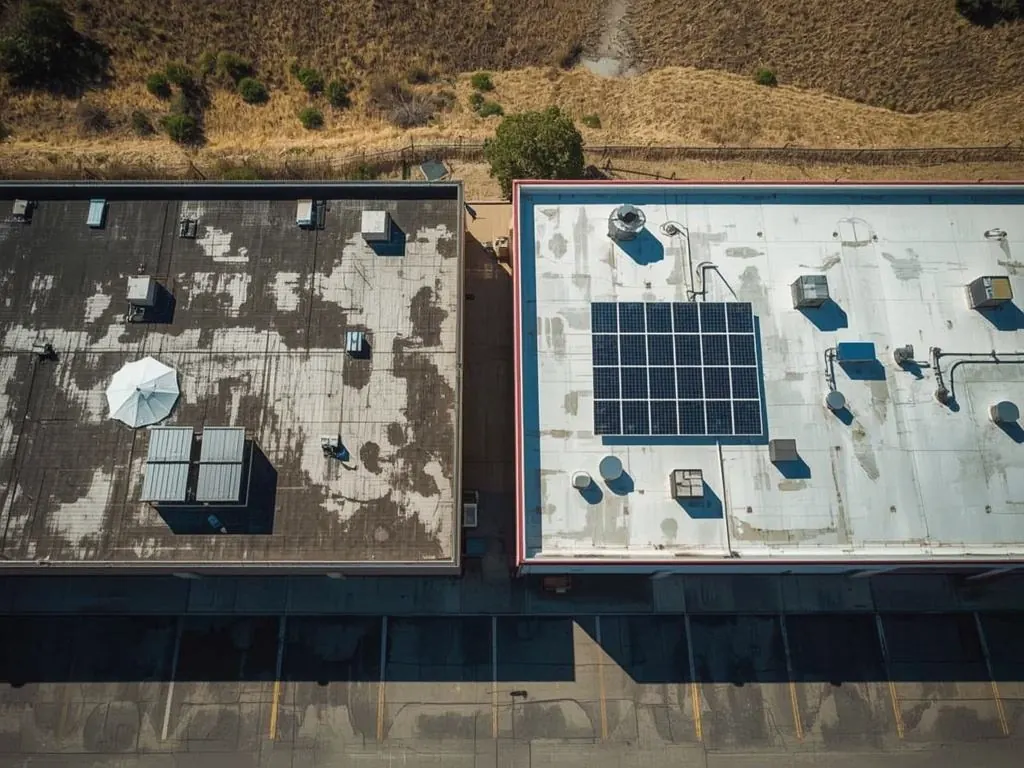
Title 24 Cool Roof Systems
CRRC-rated systems meeting the 0.63 aged reflectance requirement, resolved before the permit.
See Title 24 cool roof details →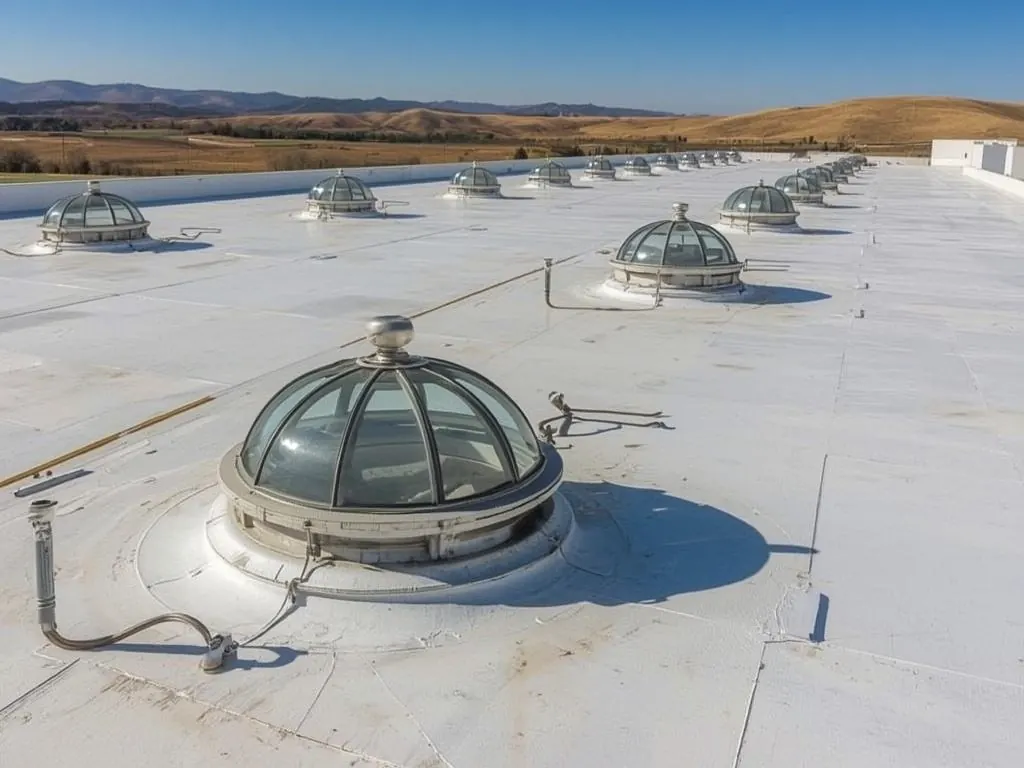
Skylight & Roof Penetration Sealing
Curbs, skylights and pipe penetrations flashed properly rather than sealed over with mastic.
See skylight and penetration details →What types of commercial roof problems do we fix in Fairfield?
Nearly every commercial roof failure we are called to in Solano County falls into one of these six categories. Knowing which one you have is what determines whether the answer is a repair, a restoration coating or a replacement.
Ponding water and failed drainage
Low-slope roofs are engineered to drain, not to hold water. Once water remains on the roof more than 48 hours after rainfall stops, it meets the generally accepted industry definition of ponding, and it starts doing real damage: accelerated membrane breakdown, added structural dead load, and concentrated dirt and biological growth attacking the seams. In Fairfield the problem is compounded by the seasonal pattern, because ponded areas sit wet through a four month wet season and then bake through a six month dry one.
The 48 hour mark is the industry threshold that separates normal post-rain drainage from a drainage defect.Seam and lap failure
The seam is where two membrane sheets join, and on a single-ply roof it is either heat-welded or adhered. A correctly heat-welded TPO or PVC seam is stronger than the membrane sheet itself. A cold weld, made at the wrong temperature or speed, looks identical from three feet away and fails in its first wet season. Older adhesive seams degrade gradually with UV and thermal cycling, opening at the edges in a pattern roofers call fishmouthing.
We probe test welded seams across the roof rather than spot checking, because a cold weld is invisible to the eye.Curb, skylight and penetration leaks
The open field of a commercial membrane is a simple, continuous, machine-welded surface and it rarely fails. Every HVAC curb, skylight, pipe, conduit, drain and equipment support is a hand-built assembly with corners, transitions and movement, and that is where the overwhelming majority of commercial roof leaks actually begin. A bead of sealant run around a failing penetration is the most common inadequate repair in the trade.
Sealant has a service life of a few years under California UV. It is a component of a flashing detail, never a substitute for one.Wind uplift and edge metal damage
Fairfield sits in the path of the Delta breeze, the marine airflow that runs through the Golden Gate, across San Pablo and Suisun Bays, and squeezes through the choke point at Collinsville before spilling into the Central Valley. Sustained afternoon wind on exposed low-slope roofs is a year-round condition here, not a storm event. Wind uplift concentrates at perimeters and corners, which is why edge metal and attachment specification matter more in this market than the membrane brand does.
On exposed Cordelia and Highway 12 corridor roofs we specify fully adhered or enhanced fastening patterns rather than standard mechanical attachment.Saturated insulation and deck corrosion
Once water gets past the membrane it saturates the insulation beneath, and from there it sits against the deck. On a metal deck that starts corrosion and on a wood deck it starts rot, and neither is visible from above or below until it is advanced. Wet insulation also loses most of its thermal value, so the building starts costing more to condition. This is the single condition that most often decides whether a roof is a repair, a restoration or a replacement.
A moisture survey maps saturated areas before any repair or coating decision, because coating over wet insulation seals the problem in.UV degradation and lost reflectance
Fairfield delivers an essentially cloudless May to October stretch with summer highs regularly in the upper 80s and into the 90s. That is months of sustained ultraviolet and thermal loading every year. Membranes chalk and craze, acrylic skylight domes yellow and crack, and reflective surfaces lose the reflectance they were specified to provide, which quietly raises cooling load and can take an ageing roof out of Title 24 compliance.
California's Energy Code is written against aged solar reflectance of 0.63, a value the Cool Roof Rating Council determines after three years of field exposure.Why Fairfield building owners choose us
Core cuts
We find the bad news before you sign
The most expensive surprise in commercial roofing is a corroded deck or a saturated insulation layer discovered after tear-off has started. Every assessment we run includes core cuts and a moisture survey, so the wet areas and the existing layer count are in the scope and in the price from the beginning. It makes our quotes less pleasant to read and your project far more predictable to budget.
21 vs 13
Maintenance is in the scope, not sold to you later
The National Roofing Contractors Association reports that commercial roofs under a maintenance program reach about 21 years of service while unmaintained roofs typically fail around 13. That is eight years on a six figure asset. Every roof we hand over comes with a written maintenance schedule and the specific inspection intervals your manufacturer warranty requires in order to stay enforceable.
Wind first
Specified for the Suisun wind corridor, not a generic wind zone
Fairfield, Suisun City, Benicia and Rio Vista sit in one of Northern California's more demanding wind environments, where the Delta breeze funnels through Suisun Bay and the Carquinez Strait. Attachment method, fastening pattern, perimeter and corner enhancement and edge metal gauge all get specified against that reality rather than against a default detail drawn for a sheltered inland site.
Get your free roof assessment before the wet season starts
Fairfield gets almost all of its 18 to 19 inches of annual rain between November and March. A defect found in September is a scheduled repair. The same defect found in January is an emergency call.
- Core cuts and moisture survey included in the assessment
- Photographic findings referenced to a roof plan
- Written scope with system, insulation and warranty tier stated
- Open 24 hours a day, 7 days a week
What types of commercial roofing services do we offer?
Eight service categories covering specification, installation, restoration, repair and the compliance paperwork that goes with commercial roofing in California.
Full commercial roof replacement
When the membrane has reached the end of its service life, when moisture scans show saturated insulation across a meaningful area, or when repair costs have started compounding year over year, replacement is the economical answer. We handle tear-off and recover across warehouse, distribution, retail and light manufacturing buildings, starting every project with core cuts and a moisture survey so the deck condition and existing layer count are known before a price is committed rather than discovered afterwards as a change order.
Published 2026 pricing puts most commercial roof systems between $5.50 and $15.00 per square foot installed.Single-ply membrane systems
TPO, PVC and EPDM cover the large majority of low-slope commercial roofs, and the right one depends on what your building does. TPO is the general purpose choice for warehouse and distribution roofs and meets California cool roof requirements straight off the roll. PVC resists the animal fats and cooking oils that destroy other membranes, which makes it the specification of record for restaurants and food processing. EPDM offers strong value on large simple roof fields and has the longest documented field record of the three.
TPO installs at roughly $6.50 to $11.50 per square foot with a published 20 to 30 year service life.Silicone restoration coatings
A coating applied over an aged but structurally sound and dry roof creates a new monolithic waterproof surface, restores reflectance and defers replacement by a decade or more. The qualification matters: the insulation has to be dry and the details have to be repairable. We run a moisture survey before quoting any coating, and when the scan comes back wet we tell you that coating is the wrong product and quote the replacement instead.
Coating systems run about $3 to $6 per square foot against $6.50 to $15 for replacement, and add a published 10 to 20 years.Repair and 24/7 leak response
Our emergency line is answered around the clock, because on an active leak the elapsed time before the first tarp goes down determines how much of your interior, inventory and equipment gets damaged. Emergency work is two-stage by necessity: stabilise the building in whatever conditions exist, then carry out the permanent warrantable repair once the roof is dry enough for adhesives and welds to bond properly.
Every emergency call produces timestamped, located photographs of the damage and the cause, in the format an insurance carrier will ask for.Preventive maintenance programs
This is the highest return decision available to most facilities managers, and the numbers are not ours. Scheduled inspections, drain clearing, debris removal and minor repairs, timed around the Fairfield wet season, with a photographic condition report after every visit that you can take straight into a capital budget meeting. Most manufacturer warranties also require documented inspection to remain enforceable.
The National Roofing Contractors Association reports maintained commercial roofs reaching about 21 years against 13 years unmaintained.Commercial metal roofing
Standing seam and structural metal systems carry the longest service horizon in commercial roofing. They suit sloped and architectural applications, agricultural and industrial buildings, and retrofit situations where new panels go over a failing metal roof without a tear-off. On existing exposed-fastener roofs where the panels are sound but the screws and neoprene washers have degraded, a full re-screw often restores weathertightness for a small fraction of replacement cost.
Metal roof systems carry a published 40 to 60 year service life at roughly $10 to $18 per square foot installed.Title 24 cool roof compliance
California's Energy Code applies to your commercial re-roof whether or not the contractor bidding it mentioned the subject. We determine the compliance path, prescriptive cool roof or the roof assembly U-factor alternative, before the permit application goes in, specify products with current Cool Roof Rating Council certificates for their aged values, and hand over the documentation at closeout because that certificate is what an inspector will ask to see.
Nonresidential low-slope roofs require 0.63 aged solar reflectance, 0.75 thermal emittance and SRI 75, in all 16 California climate zones.Inspections and moisture surveys
Condition assessments, infrared and capacitance moisture surveys, due diligence reports for property purchases, and post-storm damage documentation. Every finding is photographed and referenced to a position on a roof plan, so somebody who was never on the roof can understand the condition and compare this year's report against last year's. We quote inspections as their own fee and deliver the report regardless of whether you hire us for the work.
Core cuts establish the existing layer count, which decides whether a recover is permitted or a full tear-off is required.What you get on every job
We are a newer name in the Solano County commercial market, so rather than pointing at a review count we will tell you exactly what is standard on our jobs and invite you to hold us to it.
Licensed
California licensed roofing contractor
Roofing work is performed by appropriately licensed contractors carrying general liability and workers compensation cover. Ask us for current certificates before work starts, and verify the licence with the CSLB.
Written
Scope in writing before work starts
System, insulation R-value, attachment method, warranty tier and exclusions stated in the scope. A quote you can put alongside another bid and actually compare line for line.
Documented
Photographs and a roof plan on every job
Findings referenced to positions on a roof plan, before and after photographs, and an as-built record at closeout for your facilities file and any future warranty claim.
Registered
Manufacturer warranty in the owner's name
We complete the manufacturer inspection and register the warranty to the building owner, then hand over the documentation with the inspection schedule that keeps it valid.
Commercial roofing built around Solano County conditions
Fairfield is not a generic roofing market. It sits in the path of the Delta breeze, which means sustained wind on exposed industrial roofs for much of the year. It has a sharply divided climate, with essentially all of its rain arriving between November and March and a completely dry May to October stretch. And its commercial building stock runs from 1.28 million square feet of new logistics development in the Highway 12 corridor to century-old industrial buildings on Mare Island.
Those conditions change how a roof should be specified. Wind exposure drives attachment method and edge metal. The dry season sets the installation and coating window. The building stock determines whether you are looking at a recover, a tear-off or a restoration. We build every scope around those realities rather than around a standard detail drawn for somewhere else.
Commercial roofing across Solano County and the North Bay
Fairfield is our home market. We also cover the surrounding Solano County cities and cross into Napa County for American Canyon and Napa. Each city has its own page covering the local building stock, wind exposure and drainage conditions.
Commercial roofing questions from Fairfield building owners
How much does a commercial roof cost in Fairfield?
Published 2026 industry pricing puts most commercial roof systems between $5.50 and $15.00 per square foot installed, with TPO around $6.50 to $11.50, EPDM $4 to $12, modified bitumen $4 to $7 and metal $10 to $18. Restoration coatings run roughly $3 to $6.
Where a specific building lands inside those ranges depends on tear-off versus recover, insulation thickness required for Title 24, deck condition, how many rooftop penetrations there are, and the attachment method the wind exposure calls for. That is why we survey before quoting rather than pricing over the phone.
Do we have to close the business during a commercial re-roof?
Almost never. Commercial re-roofing is sequenced so only the section above a given area is open at a time, and that section is tied off watertight before the crew leaves each day.
Food service, medical and laboratory tenants need extra planning around odour and fumes, which is a good reason to consider a self-adhered or single-ply system rather than a torch-applied or hot-applied one.
How quickly can you respond to an emergency leak?
Our line at (707) 309-2388 is answered 24 hours a day, and active leaks are triaged ahead of scheduled work. The first visit is about stopping water entering the building and protecting your interior, stock and equipment.
During major storm events across Solano County the queue builds quickly, so we prioritise active water entering occupied space or threatening electrical equipment.
Does California's Title 24 apply to our re-roof?
For a nonresidential low-slope roof, yes. The requirement is an aged solar reflectance of 0.63, thermal emittance of 0.75 and a Solar Reflectance Index of 75, and it applies in all 16 California climate zones, so there is no Solano County exemption.
There is an alternative compliance path through the roof assembly U-factor where reflectance is lower. We establish which path your project uses before the permit application, not at final inspection.
Should we repair, coat or replace our roof?
A moisture survey usually answers it. If the insulation is dry, the deck is sound and the details are repairable, then repair or a restoration coating is the economical choice, and coating typically costs around half of replacement while adding a published 10 to 20 years.
If scans show saturated insulation across a meaningful area, or the membrane is past its published service life with widespread seam failure, replacement is the honest answer and we will show you both numbers.
Do you work on roofs you did not install?
Yes. Most of our repair, maintenance and inspection work is on roofs installed by somebody else. We identify the membrane type, check whether an active manufacturer warranty exists, and work with compatible materials so we do not void it.
If we find that the original installation is causing a recurring problem, we document that clearly so you have the evidence if you want to take it up with the original installer.
What areas do you cover?
Fairfield is our primary market and we cover Solano County broadly, including Suisun City, Vacaville, Vallejo, Benicia, Dixon and Rio Vista, plus American Canyon and Napa in Napa County.
Each of those markets has its own building stock, wind exposure and drainage conditions, and we have a page for each service in each city covering what actually changes there.
Are you licensed and insured?
Roofing work in California must be carried out by an appropriately licensed contractor, and we carry general liability and workers compensation cover. We will provide current certificates before work begins.
You can and should verify any contractor's licence directly with the California Contractors State License Board before signing anything, including ours.
Ready for a straight answer about your roof?
Free assessment with core cuts, a moisture survey and photographs. You get the findings whether or not you hire us. Serving Fairfield and all of Solano County.